Moving assets
How to Move Crypto Off an Exchange: Full Checklist
Moving a holding from one exchange to another looks like two steps — withdraw, then wait. In practice there are a dozen places it stalls. This walks the real order, from the first judgement call after the notice lands to putting the position back together on the other side.
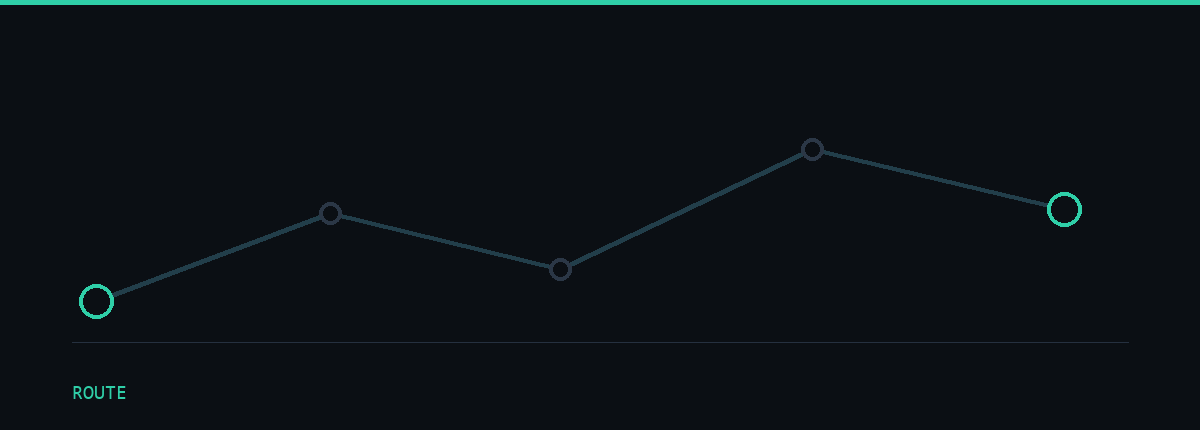
Look at how the clock runs first. Almost every exchange notice has this shape; only the lengths of the segments change.
- Day 0Notice published
All the key dates appear at once. Nothing to do yet except write them down.
- +1 day or soDeposits close
You can no longer send this coin to this platform. Anything already in flight is handled per whatever the current rules say.
- +3 to +10 daysTrading closes
The pairs come off the board. From here you can move it but not sell it.
- +30 to +90 daysWithdrawals close
The window shuts. This is the only genuinely hard deadline; the others are advance warnings.
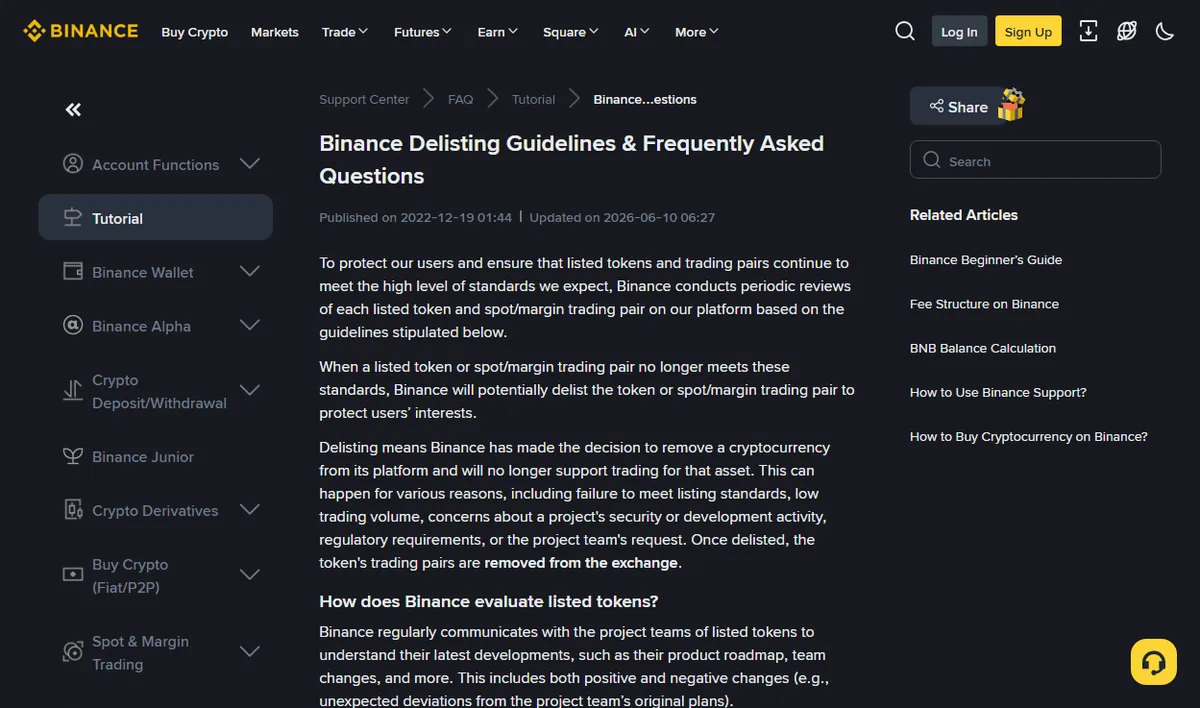
Note that last gap. Trading and withdrawals are usually separated by more than a day . Binance’s own delisting guidelines and FAQ puts it this way: cessation of withdrawals “generally takes place two months after the corresponding token’s delisting date and time” (checked 2026-08). That is the platform’s general practice, not a commitment: how long you actually have is whatever stop-withdrawal date the notice states, so do not work backwards from the general figure. A lot of people see the words "trading suspended" and market-sell in a panic, when in fact there is a long runway left. That gap is the entire reason this article exists.
What follows runs in the real order, from the first judgement call when the notice lands through to closing out the old account. The dozen or so places this stalls are placed where they occur, rather than collected into a "things to watch out for" section at the end.
Before anything: write down three dates
Two minutes here removes most of the anxiety later. Open the notice itself and find these three, then put them somewhere you will see them:
| What to look for | Usual wording | What it means for you |
|---|---|---|
| Deposits close | suspend deposits | Stop sending this coin here |
| Trading closes | delisting / remove trading pairs | After this you can only move it, so sell before if you intend to |
| Withdrawals close | suspend withdrawals | The real deadline; past it you are usually into a manual request process |
There is a fourth date that does not always appear but matters a great deal when it does: forced conversion. Some platforms will, after the withdrawal window shuts, convert whatever balance is left into a stablecoin at a market price of their choosing and credit it back to you. That sounds like a safety net. In practice the conversion price is rarely one you would have picked, and the rules describing it are written loosely. If this clause is present, treat the deadline as having moved forward.
What each of those four terms means precisely, and how the English wording maps onto other languages, is in what those dates in the notice actually mean.
While you are copying dates, do one more thing: confirm the notice is about the asset you actually hold. The same project can exist on several chains with only one version affected, and a futures delisting is a completely different event from a spot delisting. Read the full pair name rather than the ticker.
Step one: find out what you actually have
This step gets skipped, and then something turns up missing on the last day. Open the account and go through all of these:
- Spot balances, the obvious part;
- Savings, flexible and fixed products, staking: this money is locked, redemption takes time, and some products only redeem in windows;
- Futures margin — with a position open, the margin is not going anywhere;
- Referral balances, promotion rewards, pending airdrops: usually small, frequently lost entirely;
- Open orders that never filled: the funds are frozen inside them and will not withdraw until you cancel.
Add those up and you know what you are actually moving. My habit is to screenshot the portfolio overview and keep it locally, then tick items off against the image later — considerably more reliable than memory.
Two categories go missing most often. The first is anything not shown on the wallet page: order-locked amounts, futures margin, positions committed to a promotion. The overview may roll these into a single total and you only see the breakdown by clicking in. The second is anything you believe you already dealt with: a savings product bought six months ago that quietly auto-renews, or a limit order you were sure you had cancelled. Between them, those two account for most of the "I thought I had moved everything" cases.
Unlock the locked parts first
Redemptions, maturities and closing futures positions all take time, so start them before anything else. If a fixed-term product loses yield on early redemption there is a calculation to make: forfeited yield against the risk of sitting on a platform that is contracting. For small amounts I redeem early every time, leaving money somewhere shrinking in exchange for a little interest is not a sensible trade.
Futures deserve separate treatment. With an open position the margin is immobile, and closing is itself exposed to the market — nobody wants to be forced out at a bad level. So either handle it early, on your own schedule, or explicitly write it out of the migration and stop letting it hold up everything else. The worst version is leaving it until the final week and then closing from a position of no choice.
Step two: decide where it is going
Three kinds of destination, solving three different problems:
Another exchange
- The default if you intend to keep trading or using earn products
- Confirm in advance it lists the coin and supports the chain you plan to use
- Needs an account and verification, ideally done days ahead
Your own wallet
- Simplest option if the plan is to leave it alone
- The keys and recovery phrase are yours, and nobody can restore them if lost
- Trading again means sending it back, and paying another fee
When picking an exchange, do not stop at "does it list this coin". Two more things matter: whether it operates normally in your region, and whether it supports the chain you intend to use. The first decides whether this is a durable home, the second decides whether this specific transfer works at all. Both are answerable from the deposit page and the terms page in about five minutes, which is cheap compared with migrating twice.
There is a third option that is not really a destination: convert to a stablecoin first. It is an intermediate state: sell the coin being delisted while it still trades, then move something universally accepted at your own pace. It suits the case where you did not especially want to hold that asset anyway. The cost comparison between the two routes is in sell and rebuy, or just move the coin.
If you go the exchange route, one thing needs doing first: open the account and clear verification before you start moving anything. Verification can stall for days and you are on a clock. We walked that flow end to end and wrote down the parts that actually stall in opening a Binance account, step by step.

If Binance is where this is landing, our referral code gets you a fee reduction at sign-up. The code is here to copy: you enter it yourself, there is no link in this box.
BN6321This site carries Binance referral links. Using the code does not cost you more (per the current pages); up to 20% off trading fees, with the actual figure whatever the exchange page shows.
Step three: pick the network, and keep enough for the road
This is where real accidents happen, and also where the biggest savings are.
The network has to work at both ends
The same USDT on Ethereum, on Tron and on BNB Smart Chain is three different things: different address formats, no interoperability. If you withdraw over one chain, the receiving platform must support that chain for that coin, or the money sits somewhere unreachable. Sometimes support can recover it. Sometimes not.
The order that works is: open the deposit page at the receiving end first, read the list of networks it offers, pick one; then go back to the sending side and check the same one is available. Always defer to the receiving end, because "sent but not received" is an order of magnitude worse than "paid a few dollars more in fees".
A misjudgement worth naming: identical address formats do not mean identical chains. Ethereum, BNB Smart Chain, Polygon and Arbitrum all use the same forty-character hexadecimal string starting 0x, and the eye cannot tell them apart. Put a BNB Chain address into an Ethereum withdrawal and nothing errors, because the format is valid — the money genuinely goes to that address on Ethereum, where it very likely belongs to nobody. No amount of "check the address carefully" catches this. Only checking the network field does.
How far apart the fees are
Withdrawal fees vary across networks by one to two orders of magnitude: a congested Ethereum mainnet transfer can cost a double-digit dollar amount, while high-throughput chains are often fractions of a dollar. The numbers move daily and I am not going to fix them in print: the withdrawal page states exactly what this transfer will cost before you confirm, and that figure is the accurate one. Your job is simply to look at it.
Speed works the same way. Bitcoin produces a block roughly every ten minutes and Ethereum's slot interval sits in the low tens of seconds; both are protocol constants. How long you actually wait, though, also depends on how many confirmations the receiving platform requires, and that is their choice and can be raised when markets are volatile. So "Ethereum arrives in a few minutes" is true most of the time and not always. Leave the expectation loose and do not start on the final day.
A recurring trap: the fee is deducted from the amount you enter, not added on top. Enter 100 and what lands is 100 minus the fee. If the receiving platform enforces a minimum deposit and the deducted amount falls under it, the money can arrive and still not be credited. When the amount is anywhere near a threshold, do the subtraction first.
Leave a little for the road
Planning to move in several transfers? Do not empty the balance on the first one. Some chains require a small amount of the native token to pay gas, and a zeroed balance can leave you unable to move anything else there. Keep a small float and clear it up at the end.
The full treatment of picking a chain, what each one is like, and whether anything can be salvaged after a mistake is in which chain to withdraw on.
Step four: send a small one first
The cost is one withdrawal fee. The return is converting an irreversible mistake into a survivable one. However large the amount and however experienced you are, the first transfer to any new address is a small one.
-
Pick an amount just above the minimum
Too small gets rejected; too large defeats the purpose. Check the minimum at both ends, take the larger, add a little.
-
Paste the address, and check the middle, not just the ends
Clipboard hijacking is real: malware swaps the address after you copy it, and picks a replacement whose first and last characters look similar. After pasting, verify a section from the middle, or use the QR code the receiving side provides.
-
Fill in the memo where one is required
XRP, EOS and some XLM deposit addresses are shared across all users, with a memo (also called a tag or note) identifying whose money it is. Omitting it means the funds reach the platform but cannot be attributed to you; recovery is a manual ticket with no guarantee.
-
Confirm three things on arrival
Right coin, right quantity (after the fee), right account. All three, and the route is proven.
Each of the six high-frequency failures and how to avoid them is in six places withdrawals actually go wrong.
Step five: the real transfers, and what goes first
With the route proven, order matters:
- The most urgent first — the coin being delisted, since its window is shortest;
- Then the most valuable, even if the platform looks fine, move the centre of gravity;
- Then the everyday stablecoins, usable anywhere, easiest path;
- Dust last — leftovers have their own treatment, below.
On splitting: splitting caps the damage if something goes wrong and costs an extra fee each time. I use "the largest loss I could absorb" as the line, under that, one transfer; over it, two or three with a confirmed arrival between each. Not a clever rule, just a line you draw for yourself.
Withdrawals are not instant
After you confirm there is usually a second confirmation by email or authenticator, then internal review, then the broadcast. How long those add up to varies by platform and by how busy the chain is. "Submitted" is not "broadcast", and "broadcast" is not "credited": the receiving end still waits for its confirmation count. The worst thing to do during that wait is resubmit, which just sends it twice.
When a withdrawal sticks
Several things park a withdrawal in "processing": the amount crossed a risk threshold, the address is newly whitelisted and still cooling off, the account recently had security settings changed (password, phone, whitelist additions usually start a quiet period), or the chain is under maintenance. All four look identical from outside and want different responses.
What you can work out yourself: if you changed a security setting recently, it is almost certainly the cooling-off period, and waiting is the answer. If nothing changed, the amount is unremarkable and it has sat for a long time, go and look for a message asking for information. Cancelling and resubmitting repeatedly is the worst option — each attempt can re-queue, and the frequency itself reads as anomalous.
Step six: reconcile once it lands
Arrival is not the end. This step is what lets you say the move is done.
- Work down that first portfolio screenshot and tick items off;
- Store the transaction hash and the withdrawal reference for every transfer in one place;
- Check you have not confused similarly named assets: same ticker on different chains can look nearly identical in some interfaces;
- If you split the transfers, confirm the parts add back up to the original.
The hash and the reference look like clutter until something goes wrong, at which point they are the only things that let you explain what happened. What to keep, where and for how long is in which transfer records are worth keeping.
What to do about dust
A move always leaves crumbs: a few dollars of some altcoin, several decimal places of BTC. Below the minimum withdrawal, they have a few exits: convert while trading is still open, use the platform's small-balance conversion feature, or write them off. Which one pays depends on the amount and whether the asset still trades, and I did that arithmetic in leftovers below the minimum withdrawal.
Whether to rebuild the position as it was
A migration is a natural moment to look at what you are holding. The allocation probably accreted over several years and may not be one you would choose today. Since you are reassembling it anyway, two questions are worth asking: how many of these can I still give a reason for, and is any of it something I bought on impulse and never got round to dealing with?
That said, do not make large allocation decisions during the move. People are tense while migrating, and tense decisions are usually poor ones. What I do is move it across as-is, leave it a few days, and revisit once things have settled. The safety of the assets and the shape of the portfolio are two problems; solve one at a time.
Step seven: closing out the old account
The money has moved; the account has not. A few things get forgotten here and genuinely carry risk:
-
Delete API keys
Anything you once connected — copy trading, a bot, a portfolio tracker, still has a key. However far a platform winds down, the API is usually the last thing to close. Remove every key you are not using.
-
Unlink payment methods
Bank cards and third-party payment accounts sitting on a platform you no longer use have no upside.
-
Leave two-factor switched on
Some people close out by disabling two-factor in preparation for deleting the account. That is backwards. While the account exists, the protection should exist, and you may still need to log in for a residual reward or referral balance.
-
Save a final balance screenshot
Evidence that you did empty it at a given moment. If the platform later has problems and there is any kind of claims process, that image matters.
Do not clear out the emails
Everything the platform sent during this process — the notice, withdrawal confirmations, review outcomes, is worth keeping. Those messages carry timestamps and sender signatures, which makes them harder evidence than a screenshot. When you need to establish what you did on which day, one original email beats ten images. A folder in the mailbox costs nothing.
Whether to close the account depends. If a single coin was delisted and everything else is normal, there is no reason to. If the platform is exiting your region or there is substantive bad news, that is a different situation: signs a platform is in trouble collects the patterns worth taking seriously.
When it does not go smoothly
Everything above assumes the happy path. Three detours account for most of the rest:
Withdrawals suspended, but the notice says the deadline has not arrived
First establish whether this is global or one chain. Single-chain suspensions from maintenance or node upgrades are common and switching networks usually resolves it. A global suspension deserves more attention, and a check for newer notices.
The account is restricted
What you can do depends on which kind of restriction it is — some are a routine twenty-four-hour hold, some want documents. Account restricted: can you still withdraw? separates the cases and covers roughly how each is handled.
The whole region is being wound down
Harder than a single delisting, because it applies to your entire account and functions close in stages. The good news is it usually comes with more time. Order and priorities are in when an exchange leaves your region.
Risk notice: crypto prices move violently and you can lose everything you put in. On-chain transfers cannot be reversed, and losses from a wrong address or wrong network are usually unrecoverable. This piece describes an order of operations; it is not investment advice and it does not promise that any step will succeed. Some jurisdictions place additional restrictions on crypto assets: check what applies where you are before you act.
Once trading stops, do my coins disappear?
Usually not. Trading stopping only means you can no longer buy or sell it; the balance stays in the account and the withdrawal window typically runs a while longer (Binance’s delisting FAQ gives two months from the formal delisting date as the usual figure, but the notice’s stop-withdrawal date is what counts). What does change a balance is a forced conversion clause.
The notice only mentions futures pairs. Is my spot holding affected?
Not necessarily. A futures delisting and a spot delisting are separate events and the notice normally says which. Read the full pair name rather than the ticker before concluding anything.
The amount is small. Is a test transfer still worth it?
Yes. A test transfer defends against wrong-address and wrong-network errors, which are unrelated to size. The fee is a larger proportion of a small amount, but what it buys is certainty.
What if I miss the withdrawal deadline?
Check whether the platform offers a manual request route; many accept tickets for some period afterwards. Whether you get the funds back and how long it takes depends on their current policy and there is no universal answer. That is exactly why the dates go on paper first.